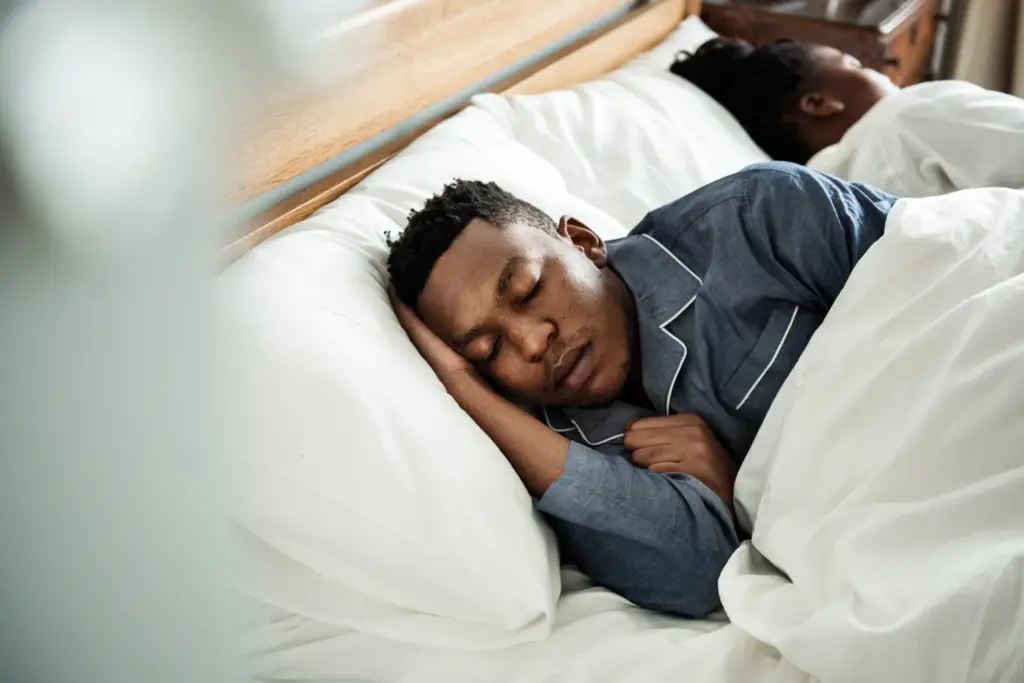
Although we don’t have a lot of say in which position we ultimately settle in (and,
for many of us, that position changes throughout the night), there are several
advantages and disadvantages to choosing the right position to fall asleep in.
What direction should you sleep in? Is it best to sleep on your right or left side,
or would it be better to fall asleep on your stomach or back? Let’s look at possible
sleeping positions and who may benefit from each.
What Are the Benefits of Sleeping on Your Side?
Side sleeping is often considered one of the most beneficial and safest sleeping
positions. From helping support optimal spinal alignment to relieving heartburn,
sleeping on your side can help in ways you may not have considered when done
correctly.
Side sleeping can also be helpful for those with sleep apnea or snoring issues — but
is one side better than the other?
Sleeping on the Right Side
Sleeping on the right side is a position that people with certain heart conditions,
like heart
failure, naturally settle into. Crucial structures of the heart are
positioned on the left side of the body, so sleeping on the left side can put too
much pressure on it and cause discomfort.
For these people, sleeping on their right side can help relieve some of that pressure
so that they can get deeper, higher-quality sleep.
Sleeping on the Left Side
The left side also has its own benefits for body function — especially for pregnant
women or those dealing with GERD (gastrointestinal reflux disease).
The same reasons people with heart conditions naturally avoid sleeping on the left
side is why pregnant women may benefit from it. Left-side sleeping can help improve
blood flow between the body and the fetus without putting additional pressure on the
liver.
However, many of these concerns aren’t as serious a problem
until later in pregnancy, so consult your OB-GYN for more specific
recommendations.
Left-side
sleeping may also help decrease the frequency and severity of heartburn
symptoms. Positioning yourself on the left side may help any stomach acid
that is backed up leave the esophagus quicker than on your right side. To help you
further, try to elevate your upper body on a pillow.
Which Side Is Best To Sleep On?
For most people, sleeping on the left side is safer and more supportive than sleeping
on the right. However, the decision should be based on which makes you feel more
comfortable and is safest. If you deal with any medical issues, consult your medical
provider for customized recommendations.
How Does Side Sleeping Compare to Other Positions?
What if you prefer to sleep on your back or stomach? How do other positions stack up?
Sleeping on your stomach is the least beneficial for the body. Not only does stomach
sleeping put pressure on your spine and vital organs, but it can also be bad for the
skin.
That doesn’t mean sleeping on your back is always better, though. While back sleeping
can be comfortable, it can also worsen the signs and symptoms of sleep apnea (like
snoring). Not getting restorative sleep can even lead to or worsen insomnia, causing a vicious cycle
of physiological and psychological symptoms that can be difficult to get rid of.
Remember, it’s normal to vary your position as you sleep — in fact, it’s a good
thing. The body will naturally adjust to avoid pain or discomfort, so moving around
in your sleep may just be your body’s way of keeping you comfortable.
How To Sleep on Your Side
There are plenty of ways to get comfortable on your side, and the best way is to do
what you feel most comfortable doing — that way, you’ll be able to fall asleep more
quickly and stay asleep longer.
The key to sleeping on your side is to keep things symmetrical. Let the natural
curvature of your spine drive how you settle in. Keep your chin and neck centered
between your shoulders and line up your shoulders with your hips. Avoid letting your
chin tilt downward or fall to either side and keep your hands and arms mirroring
each other as much as possible.
To support your hip alignment, use a small pillow between your knees. Pregnant people
will also benefit from additional pillow support at the small of their back or under
their stomach. They even make pillows explicitly designed to support the body during
pregnancy, which can be used well after the baby is born.
Try to fight the urge to curl up in the fetal position, though. As comforting as this
may feel, it does not keep the spine and hips in alignment and can increase the
likelihood that you will wake up with aches and pains in the morning.
Who Shouldn’t Sleep on Their Side?
There is no one-size-fits-all sleeping position. However, side sleeping may not be
best for those with pre-existing shoulder pain or injury, as the position puts
direct pressure on the shoulder joint. It also isn’t the most supportive sleeping
position for people worried about fighting off the signs of premature aging, like
fine lines and wrinkles.
Ultimately, let your body be your guide. If you’re waking up not feeling well-rested
or are having aches and pains in the same areas, you may want to consider trying to
“train” yourself to sleep in a different position.
The Bottom Line
Which direction should you sleep in? How else can you support your sleep quality and
get deeper, more restorative sleep? Start by taking our free sleep quiz to find out where you may be
having trouble, and then speak with a CBT-I coach to address those issues and improve
your sleep.
Good rest is one of the best things you can do for your body, so don’t let it pass
you by one more night.
Sources:
Avoidance
of the left lateral decubitus position during sleep in patients with heart
failure: relationship to cardiac size and function | PubMed
Science Update: Sleeping position during early and mid
pregnancy does not affect risk of complications, NIH-funded study suggests |
NICHD
Gastroesophageal Reflux Disease | PubMed
Body
position affects recumbent postprandial reflux | PubMed