The care system chronic insomnia never had
Roughly as many American adults live with chronic insomnia as live with diabetes. There are more than 10,000 people with chronic insomnia for every clinician trained to treat it. Stellar Sleep exists to close that gap.
The problem we exist to solve
Insomnia is a mass condition that almost nobody is trained to treat
Chronic insomnia — trouble sleeping at least three nights a week for more than three months — is one of the most common chronic conditions in the United States. It is also one of the least treated. Both halves of that sentence are worth looking at directly.
Roughly as many American adults live with chronic insomnia as live with diabetes
Each dot represents about one million US adults.
The difference is who can treat it
Diabetes is managed by a large frontline workforce — primary care clinicians treat most of it, with endocrinologists for the harder cases. Insomnia has no equivalent bench. Counting everyone qualified to treat each condition, the load per clinician is not remotely comparable.
Based on national prevalence estimates and clinician workforce counts — see the note below.
What the guidelines say
Cognitive behavioral therapy for insomnia is the first-line treatment for chronic insomnia, recommended ahead of medication by the American College of Physicians.
What usually happens
Most people get a prescription, or the generic sleep-hygiene advice — cut the caffeine, dim the screens, keep a schedule — that was designed for mild, short-term sleep problems.
And reaching that first-line treatment is the beginning of care, not the end of it. Chronic insomnia is more often than not a manifestation of deeper unresolved psychological issues — unresolved anxiety, burnout, other mental health conditions. Treating it properly means staying with someone while those root causes are worked through. That takes clinicians who are trained for it, and a way to sustain that care over time without the economics collapsing. Almost nothing in American healthcare is set up to do either.
That is the gap we exist to close.
Population figures are drawn from published national prevalence estimates; workforce figures from published clinician counts. Both are rounded to show the scale of the gap rather than a precise headcount. Chronic insomnia prevalence estimates vary with the diagnostic criteria applied.
The story behind our mission
Why we started, and what we built
Chronic insomnia is more often than not a manifestation of deeper unresolved psychological issues


Wherever you are with it, there is a way in
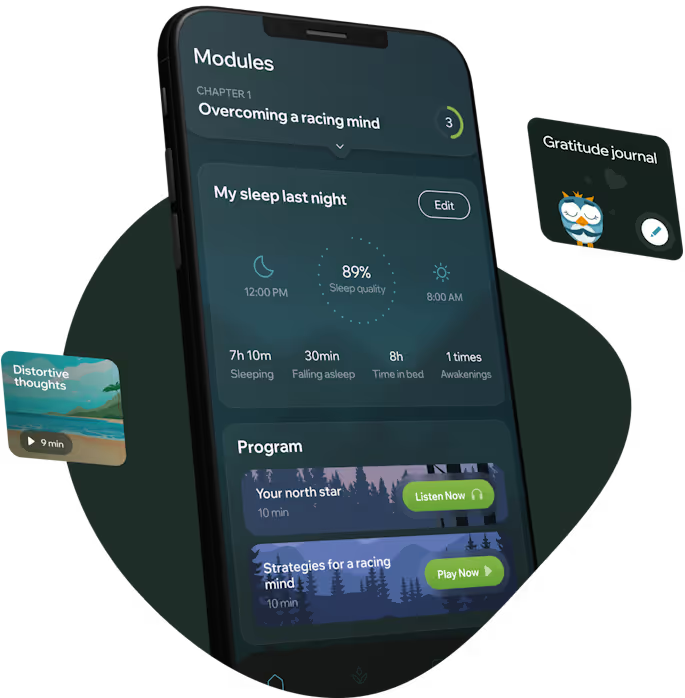
The app is the fastest place to start, built on the psychology of why you are awake rather than the symptom. If you need continuing care, our clinician network practices nationwide and works with insurance. The quiz points you to whichever one fits.
Take the sleep quiz