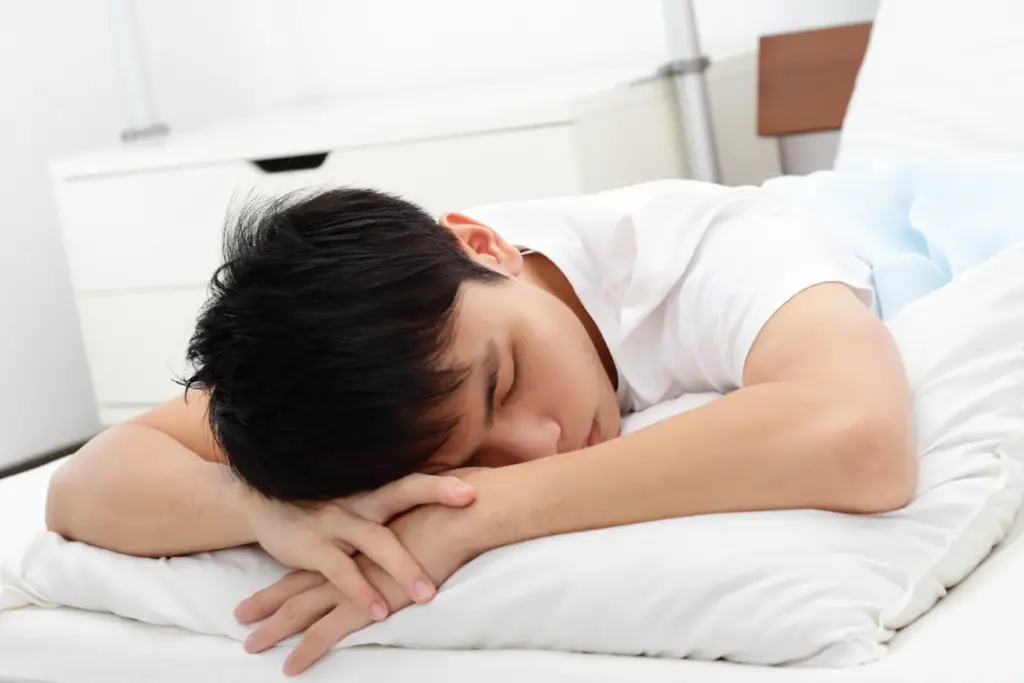
Although sleeping prone isn’t necessarily the “best” way to sleep, it can have
certain benefits when done appropriately. Perfecting the prone sleep position can
help you make the most of it, providing you with more benefits and decreasing
potential disadvantages as much as possible.
What Are the Benefits of the Prone Sleep Position?
The prone sleep position entails sleeping on your stomach. While sleeping on your
back (known as a supine sleep position) offers significantly more health benefits
than a prone sleep position, some benefits are unique to stomach sleeping:
Improves Sleep Quality
Sleeping on your stomach may improve your sleep quality. Although there isn’t much
conclusive evidence, those who sleep prone may experience fewer
middle-of-the-night awakenings. This is key for increasing the amount of
time you can spend in deeper REM sleep, where the mind and body can both recover,
heal, and grow.
If you’re waking up frequently in the middle of the night for any reason, you may
technically be getting the right amount of sleep, but not in long enough periods for
it to be beneficial.
Reduces Snoring
Do you snore? Is your partner threatening to sleep in a different room if you don’t
get your snoring under control? The prone sleep position may help minimize snoring,
especially for people with obstructive sleep apnea (OSA). Sleeping on our
stomach can reduce the likelihood of airway narrowing, the primary cause of most
snoring.
How Should You Sleep Prone?
There are many different ways to sleep on your stomach. If you feel most comfortable
sleeping on your stomach, making a few small changes to your usual stomach sleeping
game can help you benefit most from this position.
For example, stomach sleeping may be most comfortable when your mattress is medium to
firm. Anything softer than that can cause you to sink into it, throwing your body
out of alignment and causing musculoskeletal pain.
In addition, minimize the strain on your neck by using a pillow that is as flat as
possible — as long as it’s still somewhat supportive. The key is to use these
tools to help “force” your body back into natural alignment so you wake up with less
risk of pain and soreness.
It’s also important to keep your legs as straight as possible, supporting your lower
back and hips. Keeping a leg up and out to the side can be tempting, but that can be
harder on your hip alignment over the long term.
Ultimately, listen to your body and adjust as needed for your well-being. Your body
is excellent at making its own adjustments while you’re asleep, moving around until
it can get comfortable again. When you find a comfortable, supportive position to
fall asleep in, you increase the odds that you’ll sleep more deeply, experience less
tossing and turning, and wake up feeling as well-rested as possible.
Who Should Avoid Sleeping Prone?
Not everyone will benefit from a prone sleep position, even when they put extra
precautions into place. For example, infants, those who deal with chronic back pain,
and pregnant women should avoid sleeping on their stomachs.
Infants
There is a reason that the NIH and the American Academy of Pediatrics started and
promoted the “Back to Sleep” (now “Safe to Sleep”) campaign for parents and
caretakers of newborns and infants — a supine sleep position really is the safest
way for them to sleep.
Scientifically, putting infants to sleep on their backs hasn’t just been shown to
reduce the risk of sudden infant death syndrome or SIDS — it’s considered the most
critical risk factor related to this tragic event. When an infant sleeps on their
stomach, there’s an increased risk that they won’t be able to lift their head up if
their airway gets obstructed in their sleep.
Individuals With Back Pain
Sleeping on your stomach is also not the best choice for those who deal with either
acute or chronic back pain. Although the firmness of your mattress does play a role,
you’re more likely to “sink” into your bed and pull your sleep posture out of
healthy alignment when you use a prone sleep position. Pain, whether it’s lower
back, neck, or shoulder pain, can easily lead to the development of insomnia if left unmanaged.
Pregnant Women
The last group of people who should avoid prone sleep positions are pregnant women.
Although sleeping position isn’t a concern in early pregnancy, it’s not recommended
that pregnant women sleep on either their backs or their stomachs after entering the
third trimester (or after about 30 weeks gestation).
While no direct
correlation exists between sleeping prone and adverse pregnancy and birth
outcomes, it can put direct pressure on the musculoskeletal system and
increase aches and pains in late pregnancy. The result may be a reduction in blood
flow to both mom and baby.
Which Sleep Position Is Best?
There hasn’t been a conclusively proven best sleep position, but sleeping on your
side is the most likely to provide you with the most benefits and the fewest
drawbacks.
In fact, studies have been performed that closely looked at the most
common sleep positions — side, prone, and supine position — that helped to
back this belief with research. Side sleep position (especially if you sleep on yoru
left side) is the closest to natural body alignment and can help reduce the
likelihood of acid reflux symptoms.
However, most of these studies were performed on people who didn’t deal with chronic
sleep disorders or health conditions. They also consider that people often move
multiple times in their sleep, landing in different body positions. Your sleep
quality depends on the sleep position you spend the most time in, which you may not
even be aware of without a sleep study.
If you decide to try side sleeping, there are a few tips to help you have the best
experience possible. For example, it’s important that you do what you can to keep
your body as in line and symmetrical as possible.
For added benefit, slightly elevate your neck and head and place a pillow between
your legs to support your hips. If you experience any discomfort, continue to adjust
until you feel comfortable.
The Bottom Line
Every body position you sleep in can have advantages and disadvantages, including
prone sleep position. Finding a sleep position that works the best for your body and
any pre-existing health conditions — like sleep apnea or neck pain — is crucial for
helping provide the support you need when you sleep.
For additional help, take our free sleep quiz to identify any
specific areas you may need to adjust to improve your sleep health. Stellar Sleep’s
CBT-I coaches are here to help you adjust your
sleep routine so you can get the high-quality sleep you deserve.
Sources:
The effect
of the prone sleeping position on obstructive sleep apnoea | PubMed
Safe to
Sleep | NIH.gov
The prone
sleeping position and SIDS. Historical aspects and possible pathomechanisms |
PubMed
The
Relationship between Sleeping Position and Sleep Quality: A Flexible
Sensor-Based Study | PMC
Maternal
sleep position during pregnancy | NCBI Bookshelf
Sleep
Position, Age, Gender, Sleep Quality and Waking Cervico-Thoracic Symptoms |
NOVA